Animal bone as contraceptive
Animal bone as contraceptive. Authentic Muslim scientist’s research.
By Homoeopathic Dr. Sohail Ahmed·7 min read·
Ibn ʿIrs (Weasel): Its Description, Habits, and Alleged Properties in Zakariya al-Qazwini’s Work
ابن عرس
حيوان دقيق طويل يقال له بالفارسية راسو، هو عدو الفأر يدخل جحرها ويخرجها ويحب الحلي والجواهر ويسرقها، ويعادي التمساح فإنّ التمساح لا يزال مفتوح الفم وابن عرس يدخل فمه وينزل إلى جوفه ويأكل من جوفه أحشاءه ويمزقها ويخرج، ويعادي الحية أيضاً، وإذا أراد قتال الحية يأكل السذاب لأن رائحة السذاب تضعف الحية فيقتلها ابن عرس، وإذا مرض أكل بيض الدجاج يزول مرضه. وحكي أن ابن عرس تبع فأرة فصعدت شجرة ولم يزل يتبعها حتى انتهت إلى رأس الغصن ولم يبق مهرب فنزلت على ورقة وعضت طرفها وعلقت نفسها فيها، فعند ذلك صاح ابن عرس فجاءت زوجته فلما انتهت إلى تحت الشجرة قطع ابن عرس الورقة التي عضتها الفأرة فسقطت فاصطادها ابن عرس الذي كان تحت الشجرة.
فصل في خواص أجزائه: دماغه يكتحل به ينفع من ظلمة العين، لحمه يستعمل ضماداً لوجع المفاصل ويخلط بالشراب يستعمل للصرع، شحمه يطلى به السن ينفع في الحال، وصاحب الرزق يطلي خشبة بهذا الشحم وإذا اشتكى أحد سنه يضع عليه تلك الخشبة فإنّه يقع بسهولة ويظهر دمه من رقبته ويطلى به الخنازير يحللها ويخلط دمه بدم فأرة ويمزج بالماء ويرش به البيت فإنّ الخصومة تقع بين أهله، ولو دفن ابن عرس وفأرة في بيت فعل ذلك، كعبه إذا استصحبته المرأة حالة المباضعة لم تحمل، خصيته تفعل مثل ذلك، زبله يجعل على الجراح ينقطع دمها، والله الموفق.
Arabic name: Ibn ʿIrs (ابن عرس)
Urdu name: Neola (نیولا)
English name: Weasel
The weasel is a small, slender, elongated animal known in Persian as Rāsū (راسو). It is an enemy of mice, entering their burrows and driving them out. It is also said to be fond of ornaments and precious stones and to steal them.
It is likewise described as an enemy of the crocodile. According to the account, the crocodile keeps its mouth open, allowing the weasel to enter its mouth and descend into its body, where it eats and tears apart its internal organs before emerging again.
The weasel is also said to be an enemy of snakes. When preparing to fight a snake, it eats Sadhāb (سداب), a plant traditionally identified with rue. The account claims that the smell of rue weakens the snake, enabling the weasel to kill it.
It is further stated that when the weasel falls ill, it eats hen’s eggs and recovers from its illness.
A story is also related about a weasel that pursued a female mouse up a tree. It continued chasing her until she reached the end of a branch, leaving her with no apparent escape. She then moved onto a leaf, gripped its edge with her teeth, and hung from it.
At that moment, the weasel called out, and its mate came to join it. When the second weasel reached the foot of the tree, the first one cut the leaf to which the mouse was clinging with her teeth. The mouse fell, and the weasel waiting beneath the tree caught her.
A Section on the Alleged Properties of Its Body Parts
The text goes on to describe various properties attributed to different parts of the weasel’s body.
It states that its brain, when applied to the eyes as a collyrium or eye preparation, is beneficial for ẓulmat al-ʿayn, a traditional expression that may refer to dimness or obscurity of vision.
Its flesh is said to be used as a poultice for joint pain. The text also claims that when mixed with wine, it was used as a remedy for epilepsy.
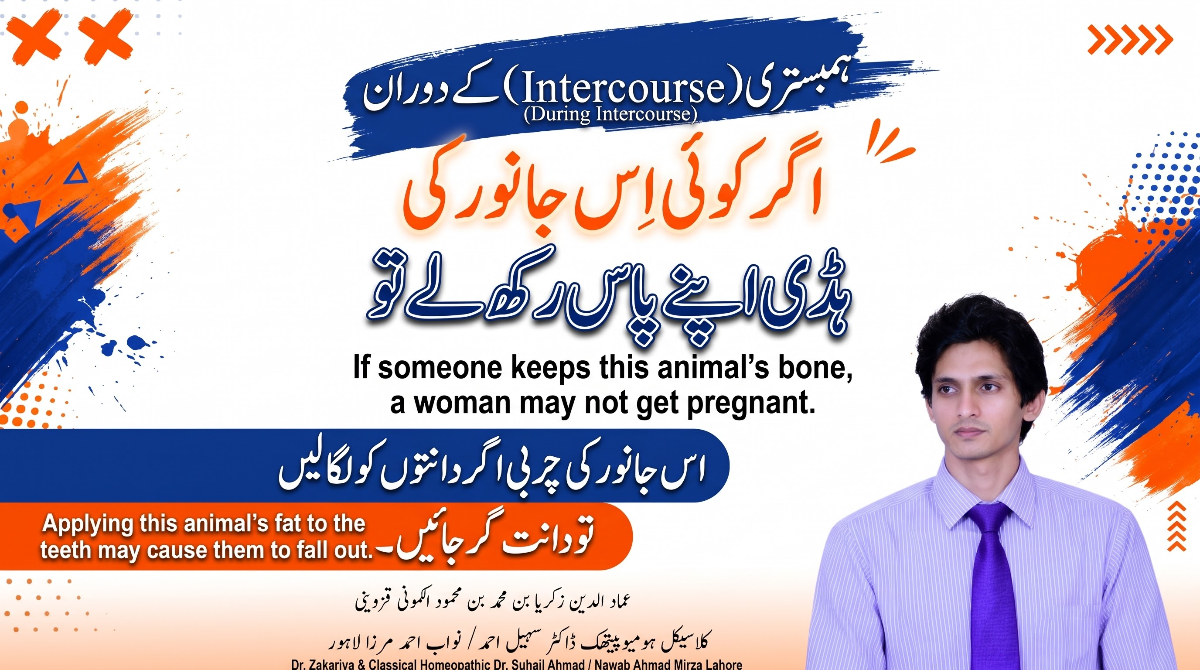
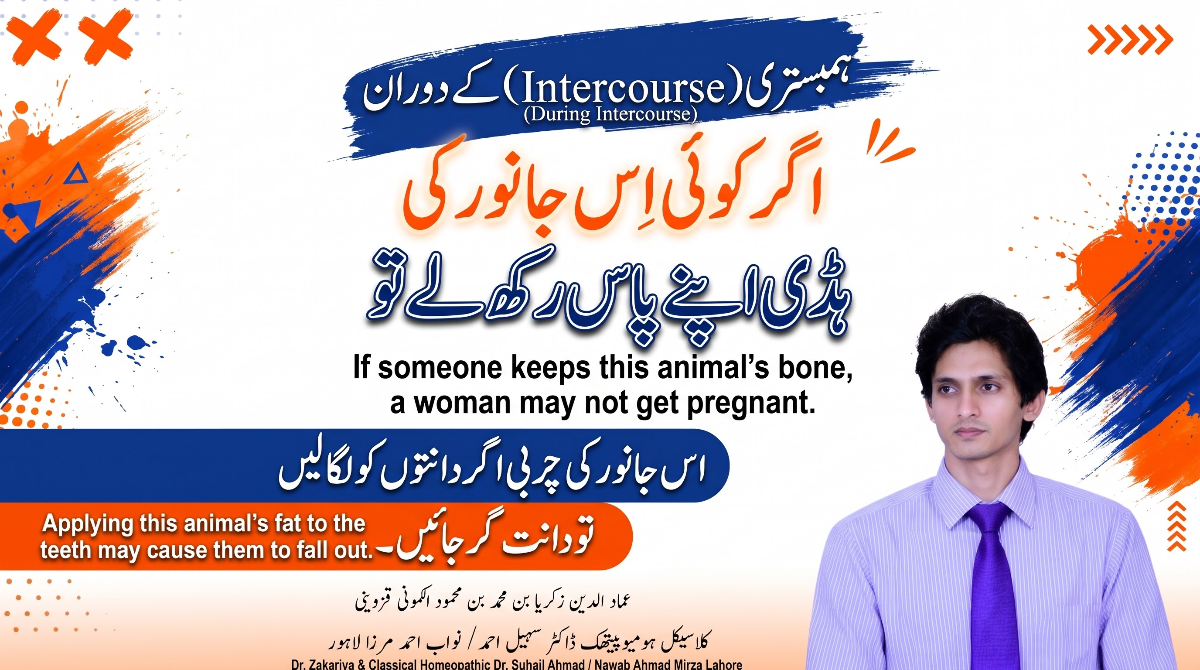
Its fat is described as having an immediate beneficial effect when rubbed onto a tooth. The passage then mentions a person referred to as Ṣāḥib al-Rizq, who is said to coat a piece of wood with this fat. When someone suffers from a toothache, the treated piece of wood is placed against the affected tooth, supposedly causing the tooth to fall out easily.
The passage next refers to blood obtained from the animal’s neck and claims that applying it to khunāzīr causes the swellings to resolve. In traditional medical terminology, khunāzīr commonly refers to scrofulous swellings or enlarged lymph nodes, although the precise condition intended here cannot be established from the passage alone.
It further claims that mixing the weasel’s blood with the blood of a female mouse, diluting the mixture with water, and sprinkling it around a house causes quarrels among the people living there. According to the text, burying a weasel and a mouse inside a house is believed to produce the same effect.
The passage also states that if a woman carries the animal’s ankle bone, referred to as kaʿb, with her during sexual intercourse, she will not conceive. Its testicles are said to have the same alleged effect.
Finally, the text claims that placing the animal’s droppings on wounds stops the bleeding.
The passage concludes with the words: “And Allah is the One who grants success.”
Biographical Note: Abū Yaḥyā Zakariyyā ibn Muḥammad al-Qazwīnī (1203–1283 CE)
Abū Yaḥyā Zakariyyā ibn Muḥammad ibn Maḥmūd al-Qazwīnī was a prominent thirteenth-century Muslim scholar, geographer, judge, and cosmographer. He is particularly known for his encyclopaedic works on the natural world and geography.
Biography
Name and lineage: His full name was Abū Yaḥyā Zakariyyā ibn Muḥammad ibn Maḥmūd al-Qazwīnī. Some biographical accounts associate his family lineage with Anas ibn Mālik, a Companion of the Prophet Muhammad (peace be upon him); however, this genealogical claim requires verification from reliable historical sources.
Birth and death: He was born around 1203 CE (605 AH) in Qazvin, in present-day Iran, and died in 1283 CE (682 AH).
Education and official positions: Al-Qazwīnī was associated with the intellectual centres of Damascus and Iraq and is reported to have studied religious and philosophical disciplines. Some accounts associate him with the intellectual circle of Ibn ʿArabī, although the precise nature of that relationship should be verified before describing Ibn ʿArabī definitively as his formal teacher.
He served as a judge (qāḍī) in the Iraqi cities of Wāsiṭ and al-Ḥillah. Following the Mongol conquest of Baghdad in 1258, he continued to develop his scholarly and literary work.
Major Encyclopaedic Works and Intellectual Contributions
1. ʿAjāʾib al-Makhlūqāt wa Gharāʾib al-Mawjūdāt
The Wonders of Creation and the Marvels of Existing Things
This is al-Qazwīnī’s best-known work. It is a major encyclopaedic account of the cosmos and the natural world, reflecting the scientific knowledge, philosophical ideas, religious beliefs, and traditional narratives of the medieval Islamic world.
The work broadly covers two interconnected domains:
The celestial realm: The heavens, the Sun, the Moon, the planets, the constellations, and the movements of celestial bodies, as understood in the cosmological traditions of his time.
The terrestrial realm: The four elements, minerals, seas, mountains, plants, animals, human beings, and other features of the natural world.
The book is especially notable for bringing together descriptions of natural phenomena, accounts of animals and plants, geographical observations, and traditional reports about extraordinary creatures. Illustrated manuscripts of the work also became important examples of medieval Islamic book culture.
Although the work is sometimes described as a scientific encyclopaedia, its contents should be understood in their historical context. It includes observations and inherited knowledge alongside legendary accounts and beliefs that have not been established by modern scientific methods.
2. Āthār al-Bilād wa Akhbār al-ʿIbād
Monuments of the Lands and Historical Accounts of Their Peoples
Al-Qazwīnī’s other major work is a geographical and historical encyclopaedia describing cities, regions, climates, natural features, communities, and notable people.
It combines geographical information with historical narratives and descriptions of the customs and characteristics associated with different places. It is therefore valuable not only for the history of geography but also for studying the cultural and intellectual world of the medieval Islamic period.
Scientific and Intellectual Legacy
Al-Qazwīnī’s principal contribution was his systematic compilation and presentation of knowledge concerning the cosmos, geography, and the natural world. His works helped preserve and transmit the intellectual traditions of his age to later generations.
His encyclopaedic approach also encouraged the production of richly illustrated manuscripts, which are now valuable resources for historians studying medieval Islamic scholarship, scientific thought, and artistic traditions.
Al-Qazwīnī should therefore be understood primarily as a medieval Muslim cosmographer, geographer, judge, and encyclopaedic writer. His enduring importance lies in the breadth of his writings and their contribution to the historical record of how scholars in his time sought to understand and describe the universe.
- #Contraceptive
- #Fertility
- #Dentition